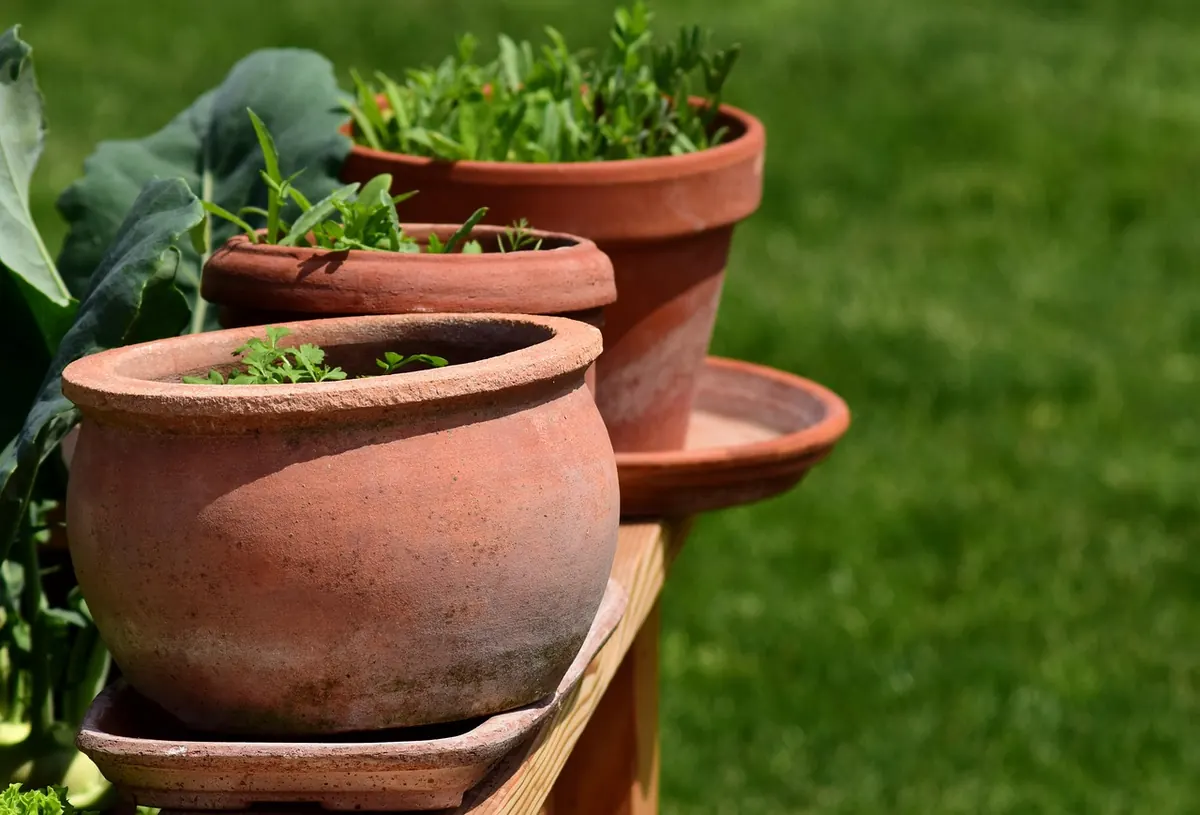
A south-facing patio wall in Britain is a warmer place than most people give it credit for. Brick and stone soak up the day's heat and release it slowly into the evening, and a bit of shelter from the wind does the rest. That microclimate suits rosemary, thyme, sage and oregano down to the ground — it's close to what they'd find on a Provençal hillside. Growing them in containers makes the whole thing easier to manage: each plant gets its own gritty mix, you can move pots around as the seasons shift, and you can lift them clear of winter wet. Here's how to put it together and keep it looking good for years rather than one summer.
Walk your patio at midday and again in the late afternoon and you'll soon spot the difference. A south- or south-west-facing wall is the obvious first choice, and a corner where two walls meet is better still — the heat bounces back from both sides. Paving, gravel and stone flags hold warmth underfoot as well, so a pot stood on hard standing will stay warmer at the roots than one on grass.
Wind matters as much as sun. It dries foliage, snaps brittle rosemary stems and tips light pots over. If your only sunny spot is a wind tunnel between a fence and a shed, consider a low hurdle or trellis as a baffle. Once you've settled on the spot, group the pots reasonably close together: they shade each other's compost, and the mass of foliage and terracotta holds warmth into the night. Don't worry about a neat arrangement — it will fill out by July.
Not everything sold as a herb belongs in this scheme. Basil sulks below about 10°C, mint wants damp ground, and chives prefer richer soil, so keep those in a shadier spot or on the kitchen windowsill. For a sunny patio, choose from these instead, with a rough guide to minimum pot size:
More Mediterranean herbs die of winter wet than of cold, and that is almost always a compost problem. Use a soil-based mix such as John Innes No. 2 and blend it with horticultural grit at roughly three parts compost to one part grit. For thyme and lavender, go half and half. Avoid moisture-retentive composts with added water-storing gel; they hold exactly what these plants hate.
Terracotta looks right and breathes well, but cheap clay cracks and flakes in a hard frost. Frost-proof terracotta, glazed stoneware or even a sturdy wooden trough will last longer. Whatever you choose needs at least one good drainage hole. Cover it with a broken shard or a scrap of mesh to stop compost washing out, but skip a thick layer of gravel in the base — it does nothing for drainage and simply raises the soggy zone closer to the roots. Stand every pot on feet or bricks, and never leave a saucer underneath.
Spring is the best time to plant, though early September works if the weather stays mild — roots establish before the cold arrives. Give each herb its own pot unless you're filling a generous trough, in which case put the largest plant in the middle and let the trailers flop forwards.
Water deeply, then let the top couple of centimetres dry out before watering again. In a hot spell that might mean daily for a small thyme pot and every second or third day for a big rosemary. In spring and autumn, once a week is often plenty. Push a finger into the compost or lift the pot to judge the weight; a light pot means it needs water.
Feed sparingly. A balanced liquid feed at half strength in late spring, and again in midsummer only if plants look pale, is ample. Rich feeding produces soft, leafy growth with weaker flavour and less resistance to cold. Stop feeding at the end of August so new growth hardens off before winter.
Cold alone rarely kills these plants; cold, sodden roots do. Move pots against the house wall, out of the prevailing wind and ideally under the eaves where they catch less rain. Raise them onto feet or bricks so water drains freely. Water very sparingly — only when the compost has been dry for a while, and only on a mild, bright morning. Don't feed and don't prune; autumn pruning encourages soft growth and leaves wounds open to the damp.
Wrap the pot rather than the plant, using bubble wrap or hessian tied with twine, and throw fleece over the foliage during a hard snap. Knock heavy snow off branches before it freezes and splits them. French lavender, purple sage and bay in colder districts are better moved into an unheated porch, cold greenhouse or conservatory for the worst of it.
Pick little and often. Snip the top few centimetres of soft growth from thyme, oregano and savory through the season, which keeps them bushy. Take whole sprigs from the tips of rosemary, never more than a third of the plant at once, and pick the outer leaves from sage. Leave a few flower spikes for the bees if you like; the flowers are edible too.
Every two or three years, repot in spring once the roots have filled the pot, trimming the rootball lightly and refreshing the compost. Keep an eye out for vine weevil grubs, which hollow out roots and leave plants wilting despite damp compost, and for rosemary beetle, whose metallic purple stripes are easy to spot on the foliage. The first summer is mostly about establishing; after that, a Mediterranean container garden looks after itself — provided you resist the urge to water it too often.
Photo: ulleo / Pixabay
A practical guide to digging, edging and compacting a durable gravel path and seating pad around a garden bench,...

Practical ways to cut the workload in a small British garden, from gravel and raised beds to evergreen structure,...
Yellow leaves, soggy compost and straggly growth usually trace back to a handful of container-care mistakes. Here's...

Gardening wisdom for your outdoor space..
